Exploring CNC Machines in China: A Clear Guide for Everyday Readers
CNC machines China has become a major part of global manufacturing. These computer-controlled tools shape metal, plastic, and other materials with high accuracy and repeatability.
Today, China stands as the world’s largest producer and consumer of machine tools, including a wide range of CNC equipment used across many industries. This article explains what CNC machines are, how they developed in China, why they matter, common types, and practical points for general understanding.
What CNC Machines Are and How They Work
CNC stands for Computer Numerical Control. Instead of a person manually guiding a cutting tool, a computer program directs the machine’s movements. The operator loads a digital design, and the machine follows precise instructions to cut, drill, mill, or turn material.
This approach reduces human error and allows the same part to be made again and again with consistent results. Common materials include aluminum, steel, titanium, and plastics. CNC machines support industries that need reliable, detailed parts without constant manual adjustment.
A Brief Look at CNC Development in China
China’s involvement with numerical control technology began in the late 1950s. Early prototypes, such as a three-coordinate milling machine developed through cooperation between research institutes and factories, marked the first steps. For many years the industry focused on building basic capacity.
Economic reforms from the late 1970s onward opened the door to technology imports, joint projects, and domestic research. Government programs, including later initiatives aimed at advancing manufacturing, encouraged greater use of CNC systems. By the 2000s China had grown into a major producer. CNC adoption in metal-cutting machines rose from roughly 30 percent in 2015 to about 51 percent in 2024. Domestic makers now supply most mid- and lower-range equipment, while higher-precision systems continue to develop.
Why CNC Machines Matter in China’s Manufacturing Landscape
Machine tools are sometimes called the “mother machines” of industry because they produce the equipment used to make nearly everything else. China’s large manufacturing base creates steady demand for CNC machines in automotive production, electronics, aerospace components, medical devices, and general machinery.
Factories use these machines to raise consistency, handle complex shapes, and support higher-volume or mixed-batch work. The concentration of suppliers in certain regions also helps shorten supply chains for parts and services. Overall, wider CNC use supports the country’s shift toward more automated and precise production methods.
Common Types of CNC Machines Produced and Used in China
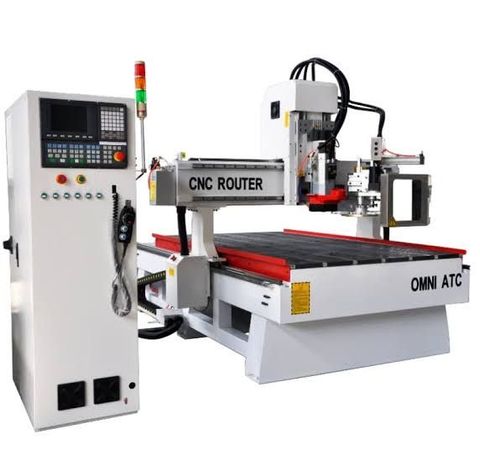
Chinese manufacturers and workshops offer several main categories. CNC milling machines remove material with rotating cutters and often operate on three to five axes for more complex shapes. CNC lathes spin the workpiece while a tool shapes it, ideal for round or cylindrical parts. Machining centers combine milling, drilling, and other operations in one setup. Other equipment includes grinders for fine finishing, routers for lighter materials, and specialized systems such as electrical discharge machines for hard metals.
Many of these machines serve both domestic factories and export markets. Lower- and mid-range models are widely available, while five-axis and high-precision versions represent ongoing areas of technical progress.
Key Strengths and Practical Considerations
Chinese CNC machines often attract attention for competitive pricing that comes from large-scale production and established industrial clusters. Regions such as the Pearl River Delta (including cities like Shenzhen and Dongguan) and the Yangtze River Delta (Suzhou, Ningbo, and surrounding areas) host dense networks of machine shops and tool builders. Shandong’s Tengzhou area is known for smaller drilling and milling machines.
Buyers commonly note the range of options, from basic three-axis units to more advanced multi-axis centers. Quality standards such as ISO certifications are followed by many suppliers. At the same time, the highest-end control systems and ultra-precision machines still see significant international participation. Choosing equipment usually involves matching the required accuracy, material, and production volume to available models.
Here is a simple overview of typical application areas:
| Industry | Approximate Share of Demand | Typical CNC Uses |
|---|---|---|
| Automotive | Around 25% | Engine parts, transmission components |
| Electronics | Around 22% | Enclosures, precision connectors |
| General Machinery | Around 14% | Structural and functional parts |
| Medical Devices | Around 9% | Instruments and implants |
| Aerospace | Growing share | Complex structural components |
These figures reflect broad industry patterns and can shift with market conditions.
Frequently Asked Questions About CNC Machines China
What does CNC stand for?
It means Computer Numerical Control—a system that uses programmed instructions to guide machine tools.
Why are so many CNC machines made in China?
China has a large manufacturing sector, extensive industrial clusters, and decades of investment in machine-tool capacity, making it both a top producer and a top user.
Are Chinese CNC machines suitable for precision work?
Many mid-range and some higher-end models meet the accuracy needs of automotive, electronics, and general engineering. Very specialized ultra-high-precision applications may still draw on a mix of domestic and imported systems.
Where are the main production areas?
Major concentrations exist in Jiangsu, Guangdong, and Zhejiang provinces, along with specialized centers such as Tengzhou in Shandong.
How has CNC use changed in recent years?
The share of CNC-equipped metal-cutting machines has roughly doubled since the mid-2010s, reflecting broader automation trends.
Conclusion
CNC machines China play a central role in modern manufacturing. From their early development decades ago to today’s position as a global production and consumption leader, these tools support a wide range of industries with consistent, programmable precision. Understanding the basic types, regional strengths, and application areas helps anyone interested in how everyday products are made. As manufacturing continues to evolve, CNC technology remains a practical foundation for accuracy and efficiency.

Related Post...
Exploring CNC Machines in China: A Clear Guide for Everyday Readers
Updated: October 20, 2026
Read More
Submersible Pump Manufacturing: Insights Into Modern Production and Reliability
Updated: September 30, 2026
Read More
Discover China’s Top Electronics Manufacturers Shaping Global Tech
Updated: October 20, 2026
Read More