Microcontrollers: Industrial Applications, Suppliers, and Embedded Solutions
Microcontrollers are essential components in modern electronic devices, industrial equipment, automotive systems, and automated manufacturing processes.
They combine processing capabilities, memory, and input/output controls within a compact integrated circuit. Businesses researching microcontrollers, industrial microcontroller manufacturers, or microcontroller suppliers for manufacturers often evaluate performance, reliability, compatibility, and long-term product support before selecting a suitable solution.
Understanding Microcontrollers and Their Importance
What Is a Microcontroller?
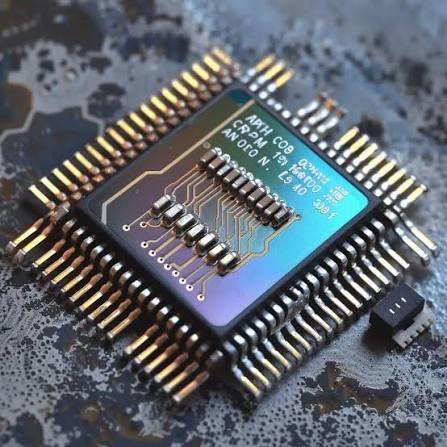
A microcontroller is a small computing device designed to control specific functions within an electronic system. Unlike general-purpose computers, it typically performs dedicated tasks, such as reading sensor data, controlling motors, monitoring temperatures, or managing communication between electronic components.
Microcontrollers are commonly used in household appliances, industrial controllers, medical equipment, vehicles, and smart devices. Their ability to execute programmed instructions makes them useful for applications that require consistent operation and real-time responses.
Why Microcontrollers Matter in Modern Industry
Industrial operations increasingly rely on automated equipment, connected sensors, and electronic control systems. Microcontrollers help coordinate these components by processing signals and executing predefined instructions.
Their importance extends to several areas:
Automation: Controls machinery, production sequences, and equipment movements.
Monitoring: Collects information from sensors and identifies changes in operating conditions.
Energy management: Supports controlled operation of motors, lighting, and other electrical systems.
Connectivity: Enables communication between devices and larger control platforms.
Safety functions: Supports monitoring and control mechanisms designed around application-specific safety requirements.
Types of Microcontrollers and Their Applications
8-Bit, 16-Bit, and 32-Bit Microcontrollers
Microcontrollers differ in processing architecture, memory capacity, peripherals, and computing capabilities. The appropriate option depends on the complexity of the application rather than processor size alone.
| Microcontroller type | Common applications | General characteristics |
|---|---|---|
| 8-bit | Simple appliances and basic controllers | Suitable for relatively straightforward tasks |
| 16-bit | Motor controls and measurement equipment | Offers capabilities for more demanding control tasks |
| 32-bit | Industrial automation and connected devices | Supports more complex processing and communication requirements |
A 16-bit microcontroller supplier may serve projects requiring particular control capabilities and hardware compatibility. Similarly, a 32-bit microcontroller manufacturer may support applications involving advanced processing, multiple peripherals, or sophisticated embedded software.
Microcontrollers for Industrial Automation
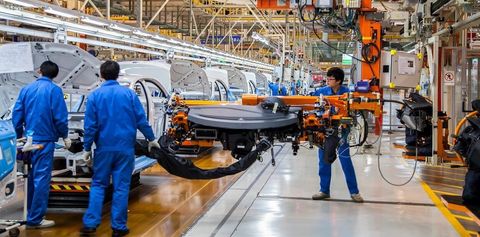
A microcontroller for industrial automation can manage sensors, actuators, motor controllers, and equipment interfaces. These components are found in packaging machinery, manufacturing lines, building controls, and process monitoring equipment.
Industrial control microcontroller systems must be selected according to operating temperatures, electrical conditions, electromagnetic interference, expected service life, and maintenance requirements. Designers should also consider whether the device supports the communication protocols used by the wider system.
Choosing Microcontroller Manufacturers and Suppliers
Factors to Evaluate Before Selection
Choosing an industrial microcontroller manufacturer involves more than comparing processor specifications. Organizations should assess the supplier's technical documentation, product availability, engineering capabilities, and support arrangements.
Important considerations include:
Technical specifications: Check processing performance, memory, peripherals, and power requirements.
Operating conditions: Confirm suitability for the intended environment.
Product lifecycle: Review expected availability and component replacement plans.
Development tools: Assess software libraries, debugging tools, and documentation.
Compliance: Identify relevant industry standards and application-specific requirements.
Technical support: Determine whether engineering assistance is available during development and maintenance.
Microcontroller suppliers for manufacturers may provide individual components, development boards, reference designs, or broader engineering support. Comparing these capabilities helps organizations identify suppliers that align with their project requirements.
Custom Microcontroller Design and Embedded Engineering
Some applications require more than standard components. Custom microcontroller design services can help businesses evaluate specialized hardware requirements, peripheral integration, power management, and system architecture.
An embedded systems engineering company may also support circuit design, firmware development, prototyping, testing, and integration. In many projects, using an established microcontroller with customized firmware is a practical alternative to developing a completely new integrated circuit.
Automotive and Industrial Firmware Solutions
Automotive Microcontroller Suppliers
Automotive electronics use microcontrollers for functions such as engine management, body controls, dashboard displays, battery monitoring, and driver assistance systems. Automotive microcontroller suppliers must address demanding requirements involving environmental durability, quality management, and product traceability.
An automotive ECU microcontroller supplier should be evaluated according to the electronic control unit's function, supported interfaces, operating conditions, and applicable automotive standards. Safety-related applications may require additional development and validation processes.
Industrial Firmware Development
Industrial firmware development companies create the software that allows embedded hardware to perform its intended functions. Firmware can manage sensor readings, communication, timing, diagnostics, and interactions between electronic components.
Reliable development practices typically include code reviews, testing under expected operating conditions, fault handling, and documentation. Security considerations are also important when controllers connect to networks or communicate with external devices.
Frequently Asked Questions
What industries use microcontrollers?
Microcontrollers are used in manufacturing, automotive electronics, consumer appliances, energy systems, agriculture, telecommunications, and building automation.
How do businesses select a microcontroller supplier?
Businesses generally compare technical specifications, component availability, documentation, engineering support, quality requirements, and expected product lifecycle.
What is the difference between a microcontroller and an embedded system?
A microcontroller is an electronic component that executes programmed instructions. An embedded system combines hardware and software, potentially including a microcontroller, sensors, communication interfaces, and other components, to perform a dedicated function.
When are custom microcontroller design services useful?
These services may be relevant when an application has specialized hardware requirements, integration challenges, or performance constraints that existing components cannot adequately address.
Conclusion
Microcontrollers provide the control and processing capabilities behind many industrial, automotive, and electronic applications. Understanding processor types, environmental requirements, firmware needs, and supplier capabilities helps organizations make informed technical decisions. Whether evaluating a 32-bit microcontroller manufacturer, an automotive supplier, or an embedded engineering company, the most appropriate solution depends on the application's specific requirements and long-term support needs.

Related Post...

Pressure Calibration Systems: Learn Why Calibration Accuracy Matters Right Now
Updated: September 28, 2026
Read More
Vertical Turbine Pumps: Insights Into Design, Uses, and Critical Reliability
Updated: September 30, 2026
Read More
Industrial Water Pumps: Facts to Know for Reliable Performance Under Pressure
Updated: September 30, 2026
Read More