Vision Sensors: Applications in Industrial Automation and Quality Inspection
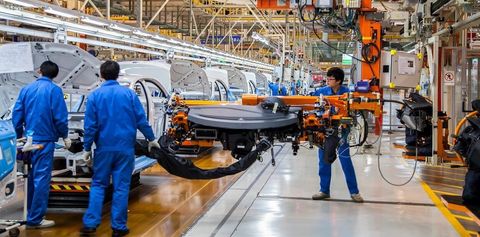
Vision sensors are important tools in modern manufacturing, helping machines identify objects, check product quality, and support automated production processes.
Industrial vision sensors combine cameras with image-processing technology to examine products and guide equipment. From machine vision inspection systems to factory automation vision sensors, these technologies help manufacturers collect visual information and make consistent inspection decisions across different production environments.
What Are Vision Sensors?
How Vision Sensors Work
Vision sensors capture images of objects and analyze visual details such as shape, color, position, size, and surface condition. Depending on the system, built-in software or connected processing equipment compares these details against defined requirements. The results can help production machinery identify products, detect visible defects, or determine whether an item is positioned correctly.
Types of Industrial Vision Sensors
Different applications require different sensing capabilities. Common categories include:
2D vision sensors: Analyze flat images for object identification, label inspection, and basic dimensional checks.
3D vision sensors: Capture depth information to evaluate object height, shape, and spatial position.
Laser displacement measurement sensors: Measure distances or surface variations using laser-based techniques.
Smart vision sensors: Combine image capture and processing in a compact unit for specific inspection tasks.
Why Vision Sensors Matter in Manufacturing
Supporting Quality Control
Manufacturers use vision sensors to examine products during production rather than relying exclusively on manual inspection. These systems can identify visible scratches, missing components, incorrect labels, and dimensional differences when configured for those tasks. Automated quality inspection equipment can also record inspection results, helping production teams investigate recurring issues.
Improving Automation and Consistency
Factory automation vision sensors provide visual information that other machines can use to perform repetitive operations. For example, a robotic arm may use camera data to locate an object before picking it up. Consistent inspection procedures can support production planning, although performance depends on lighting, product variation, sensor configuration, and operating conditions.
Key Applications of Vision Sensors
Robotics and Object Recognition
Vision sensors for robotic automation help robots locate, recognize, and orient objects. Industrial object recognition sensors may distinguish between product types, identify components, or support sorting operations. These capabilities are useful in packaging, assembly, material handling, and automated warehouse processes.
Semiconductor and Automotive Inspection
Semiconductor wafer inspection vision systems examine surfaces for selected irregularities, contamination, or pattern-related issues. Automotive component vision inspection checks items such as connectors, castings, fasteners, and assembled parts. The required resolution and inspection method depend on component size, production speed, and the defects being evaluated.
Web and Surface Inspection
Web inspection vision systems for manufacturing monitor continuously moving materials, including films, paper, textiles, and coated surfaces. They can help identify visible inconsistencies across large production areas. In other applications, deep learning visual inspection systems use trained models to recognize more complex patterns, provided that suitable training data and validation procedures are available.
Choosing the Right Vision Sensor
Important Selection Factors
Before selecting a system, manufacturers should consider the inspection task, production environment, and integration requirements. Important factors include:
Resolution: Whether the sensor can capture the smallest relevant feature.
Working distance: How far the sensor must operate from the object.
Lighting conditions: Whether reflections, shadows, or changing illumination affect image quality.
Processing speed: Whether results can be produced within the production cycle.
Integration: Compatibility with robots, programmable controllers, and existing software.
Maintenance: Cleaning requirements, calibration, replacement parts, and technical support.
A machine vision sensor manufacturer may provide application testing and configuration guidance. Comparing a machine vision sensor supplier’s specifications, integration support, and documentation can help organizations assess suitability.
Common Vision Sensor Types Compared
| Sensor type | Main capability | Typical application |
|---|---|---|
| 2D vision sensor | Analyzes images | Label and part inspection |
| 3D vision sensor | Captures depth and shape | Robotic picking |
| Laser displacement sensor | Measures distance or height | Surface measurement |
| Deep learning vision system | Recognizes trained visual patterns | Complex defect classification |
Frequently Asked Questions
What are industrial vision sensors used for?
Industrial vision sensors support object identification, product inspection, positioning, measurement, and automated quality control across manufacturing environments.
What is the difference between 2D and 3D vision sensors?
A 2D sensor analyzes image information such as color and shape, while a 3D sensor also captures depth information to assess spatial features.
What should buyers look for in a vision sensor supplier?
Consider technical specifications, application experience, system compatibility, documentation, calibration support, and the supplier’s ability to demonstrate performance under realistic production conditions.
When are deep learning visual inspection systems useful?
They may be appropriate when defects have complex or variable appearances that are difficult to describe using fixed inspection rules. Performance should be validated using representative samples.
Conclusion
Vision sensors support modern manufacturing by providing visual information for inspection, measurement, identification, and robotic guidance. Choosing appropriate industrial vision sensors requires understanding the application, operating environment, and required inspection accuracy. Careful testing and integration can help manufacturers determine whether a vision-based system fits their production requirements.

Related Post...
Industrial Water Pumps: Facts to Know for Reliable Performance Under Pressure
Updated: September 30, 2026
Read More
Vertical Turbine Pumps: Insights Into Design, Uses, and Critical Reliability
Updated: September 30, 2026
Read More