Industrial Screw Pumps: Types, Working, Applications & Selection
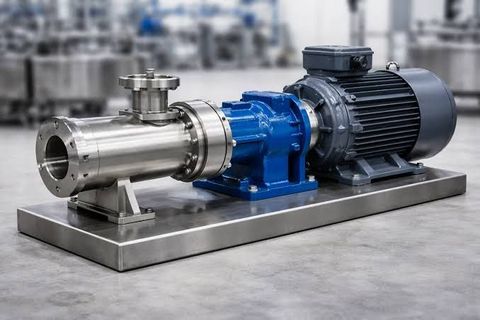
Industrial screw pumps are positive displacement pumps that use one or more rotating screws to move liquids through a pump chamber.
They are designed for continuous fluid transfer and can handle many liquids across industrial processing environments.
Depending on their configuration, screw pumps can be used for lubricating oils, fuels, chemicals, polymers, wastewater, slurries, and other fluids with suitable characteristics. Their smooth pumping action makes them useful in applications where consistent flow and controlled fluid handling are important.
What Are Industrial Screw Pumps?
Industrial screw pumps transfer fluid by creating sealed cavities between rotating screw elements and the pump casing. As the screws rotate, these cavities move from the suction side toward the discharge side.
Unlike centrifugal pumps, screw pumps are positive displacement devices. Their performance is influenced by factors such as screw geometry, rotational speed, fluid viscosity, pressure, and temperature.
A typical screw pump includes:
- Pump casing
- Screw rotor or rotors
- Drive shaft
- Bearings
- Mechanical seals
- Suction connection
- Discharge connection
- Coupling
- Drive motor
The construction varies according to the pump configuration and application.
Types of Industrial Screw Pumps
Single Screw Pumps
Single screw pumps use one helical rotor operating inside a specially shaped stator. The rotor creates progressing cavities that transport fluid through the pump.
They are often associated with fluids containing suspended solids or materials that require controlled handling.
Twin Screw Pumps
Twin screw pumps use two intermeshing screws to move fluid continuously from the inlet toward the discharge. They can handle a broad range of flow conditions and are used in several industrial processing applications.
Triple Screw Pumps
Triple screw pumps generally use one driven screw and two idler screws. The screw arrangement provides continuous fluid movement and is commonly associated with clean, lubricating liquids.
Multi-Screw Pumps
Specialized multi-screw designs can use additional screw elements to meet particular flow, pressure, or fluid-handling requirements.
How Industrial Screw Pumps Work
The basic pumping cycle occurs through the rotation of the screw elements.
1. Fluid Entry
Liquid enters the pump through the suction connection as the screw rotation creates an inlet flow path.
2. Cavity Formation
The screw geometry forms enclosed spaces between the rotating elements and pump housing.
3. Fluid Transfer
These spaces move axially along the pump as the screws rotate, carrying the liquid toward the discharge side.
4. Continuous Discharge
The fluid exits through the discharge connection as the rotating screws continue to advance the trapped liquid.
This produces a relatively smooth flow compared with many reciprocating positive displacement pumps.
Main Components
| Component | Function |
|---|---|
| Pump casing | Contains the screw elements and fluid |
| Screw rotors | Transport fluid through the pump |
| Drive shaft | Transfers rotational power |
| Bearings | Support rotating components |
| Mechanical seals | Reduce leakage around shafts |
| Suction port | Provides fluid entry |
| Discharge port | Directs fluid into the process |
| Coupling | Connects pump and motor |
| Motor | Provides rotational energy |
| Relief system | Helps protect against excessive pressure |
Materials and component designs are selected according to fluid properties and operating conditions.
Applications of Industrial Screw Pumps
Oil and Gas
Screw pumps can be used for crude oil, fuel, lubricating oil, and other hydrocarbon fluids where their flow characteristics are appropriate.
Chemical Processing
Chemical plants may use screw pumps for transferring viscous or chemically compatible liquids between processing stages.
Marine Systems
Screw pumps are used in some marine applications for fuel transfer, lubrication, circulation, and other fluid-handling duties.
Food and Beverage Processing
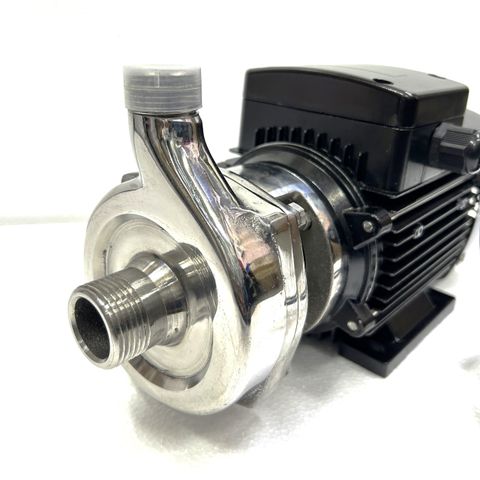
Hygienic screw pump designs can handle selected food products, oils, syrups, sauces, and other liquids where controlled and continuous flow is required.
Wastewater and Sludge Handling
Certain single-screw and progressive-cavity designs can handle fluids containing suspended solids or higher-viscosity materials.
Polymer and Chemical Manufacturing
Screw pumps can be integrated into systems handling resins, polymers, adhesives, and other viscous process materials.
Advantages of Screw Pumps
Industrial screw pumps provide several useful operating characteristics:
- Smooth and continuous flow
- Positive displacement operation
- Ability to handle many viscous liquids
- Relatively low pulsation
- Good suction characteristics in suitable applications
- Compact configurations
- Continuous-duty operation
- Multiple rotor configurations
- Compatibility with variable-speed drives
Actual performance depends on the pump design, fluid properties, speed, pressure, and installation conditions.
Screw Pump Performance Factors
Several technical parameters influence pump selection and operation.
| Parameter | Importance |
|---|---|
| Flow rate | Determines required liquid transfer capacity |
| Discharge pressure | Defines the required pressure capability |
| Viscosity | Influences filling, leakage, and power requirements |
| Temperature | Affects fluid properties and material selection |
| Speed | Controls displacement and operating behavior |
| Fluid composition | Determines compatibility and wear considerations |
| Solids content | Influences suitable pump configuration |
| Efficiency | Affects energy requirements |
The selected pump should operate within the manufacturer's specified limits.
How to Select Industrial Screw Pumps
Selection should begin with a complete assessment of the process fluid and operating conditions.
Important factors include:
- Required flow rate
- Operating pressure
- Fluid viscosity
- Fluid temperature
- Density
- Solids concentration
- Chemical compatibility
- Required rotational speed
- Continuous or intermittent operation
- Seal arrangement
- Pump materials
- Motor requirements
- Installation configuration
For food and pharmaceutical applications, hygienic design and cleanability may also be important. For chemical applications, corrosion resistance and material compatibility require careful evaluation.
Maintenance Considerations
Routine maintenance can help maintain reliable screw pump operation.
Important activities may include:
- Checking mechanical seals
- Inspecting screw elements
- Monitoring bearings
- Checking shaft alignment
- Inspecting couplings
- Monitoring vibration and temperature
- Checking pressure and flow
- Inspecting lubrication systems
- Examining piping connections
- Reviewing unusual operating noise
Maintenance intervals should follow the manufacturer's documentation and the actual operating environment.
Screw Pumps vs Other Industrial Pumps
Different pump technologies have different operating characteristics.
| Pump Type | Typical Characteristic |
|---|---|
| Screw pump | Smooth positive displacement flow |
| Gear pump | Compact design for many viscous fluids |
| Centrifugal pump | Suitable for many high-flow applications |
| Piston pump | Suitable for certain high-pressure duties |
| Diaphragm pump | Useful for various chemical and solids-handling applications |
The correct technology depends on the process rather than flow rate alone.
Conclusion
Industrial screw pumps provide continuous positive displacement pumping for a broad range of industrial fluids. Single, twin, triple, and specialized multi-screw configurations can be selected according to fluid properties, pressure, flow, temperature, and process requirements.
Their smooth flow characteristics and ability to handle many viscous liquids make them useful in oil and gas, chemical processing, food production, marine systems, wastewater applications, and manufacturing. Proper equipment selection requires consideration of the complete fluid-handling system and its operating conditions.

Related Post...
Industrial Vacuum Pumps: Types, Working, Applications & Selection
Updated: September 19, 2026
Read More
Industrial Fire Pump Systems: Types, Components & Applications
Updated: September 19, 2026
Read More
Metering Pump Systems: Types, Working, Applications & Selection
Updated: September 19, 2026
Read More