Industrial Dosing Pumps: Types, Working, Applications & Selection
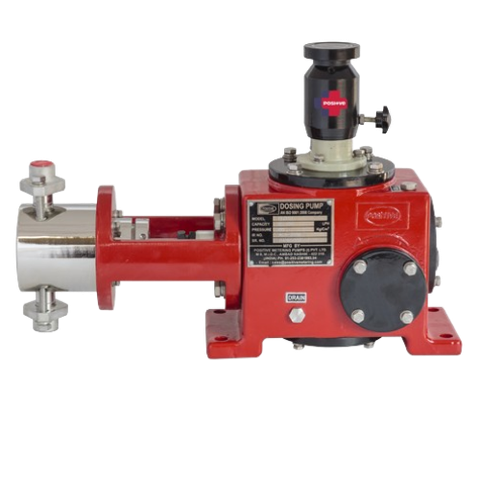
Industrial dosing pumps are precision fluid-handling devices designed to inject controlled quantities of liquids into industrial processes.
They are commonly used for chemical treatment, water purification, process control, manufacturing, and other applications where consistent liquid addition is required.
Unlike conventional transfer pumps, dosing pumps are designed around controlled flow and repeatable delivery. Their configuration depends on the liquid characteristics, required dosing rate, discharge pressure, temperature, and process conditions.
What Are Industrial Dosing Pumps?
Industrial dosing pumps deliver a predetermined volume of liquid at a controlled rate. They can be operated continuously or intermittently and may be controlled manually, electronically, or through an automated process-control system.
A complete dosing installation may include:
- Dosing pump
- Chemical storage tank
- Suction piping
- Discharge piping
- Injection point
- Valves
- Calibration equipment
- Pressure-relief device
- Flow monitoring
- Control panel
The materials used in the wetted parts should be compatible with the liquid being handled.
Types of Industrial Dosing Pumps
Diaphragm Dosing Pumps
Diaphragm pumps use a flexible membrane to move liquid through the pump head. The diaphragm separates the process liquid from the mechanical drive components.
They are commonly used for chemical dosing where controlled flow and fluid isolation are important.
Plunger Dosing Pumps
Plunger pumps use a reciprocating plunger to displace liquid. They can be suitable for applications requiring relatively high pressure and precise liquid delivery.
Solenoid Dosing Pumps
Solenoid-driven pumps use electromagnetic movement to actuate a diaphragm. They are often used for smaller dosing capacities and electronically controlled chemical injection.
Motor-Driven Dosing Pumps
Motor-driven systems use an electric motor and mechanical drive arrangement to control the movement of the pumping element. They can be configured for continuous industrial processes.
Peristaltic Dosing Pumps
Peristaltic pumps use rollers or another rotating mechanism to compress flexible tubing. The liquid remains within the tubing during pumping, which can be useful for selected corrosive or contamination-sensitive applications.
How Industrial Dosing Pumps Work
The operating cycle depends on the pump technology, but controlled displacement generally follows several stages.
1. Liquid Supply
The dosing liquid is stored in a tank or supplied from another process system.
2. Suction
The pumping mechanism draws a defined quantity of liquid into the pump chamber or tubing.
3. Displacement
The diaphragm, plunger, or other pumping element moves the liquid toward the discharge side.
4. Injection
The measured liquid enters the process through a designated injection point.
5. Flow Adjustment
The dosing rate can be controlled through stroke length, stroke frequency, motor speed, electronic signals, or a combination of these methods.
Main Components
| Component | Function |
|---|---|
| Dosing pump | Controls and delivers liquid |
| Pump head | Contains the pumping mechanism |
| Diaphragm or plunger | Displaces the liquid |
| Motor or actuator | Drives the pumping mechanism |
| Suction line | Transfers liquid to the pump |
| Discharge line | Carries liquid to the process |
| Injection valve | Controls process injection |
| Relief valve | Helps protect against excessive pressure |
| Calibration device | Verifies dosing performance |
| Control panel | Manages and monitors operation |
The exact configuration depends on the application and pump technology.
Applications of Industrial Dosing Pumps
Water and Wastewater Treatment
Dosing pumps are used to introduce treatment chemicals for pH adjustment, disinfection, coagulation, and other water-treatment processes.
Chemical Processing
Chemical manufacturing plants use dosing pumps to introduce catalysts, reagents, additives, acids, alkalis, and other process chemicals at controlled rates.
Boiler Water Treatment
Dosing systems can inject compatible treatment chemicals into boiler water circuits to help maintain specified water chemistry.
Cooling Water Treatment
Industrial cooling systems may use dosing pumps to introduce water-treatment chemicals according to process requirements.
Pharmaceutical Manufacturing
Specialized dosing equipment can be used for controlled addition of compatible liquids, processing chemicals, and formulation components.
Food and Beverage Processing
Suitable dosing pumps can deliver ingredients, additives, and processing liquids at controlled rates where hygienic process requirements are met.
Advantages of Industrial Dosing Pumps
Industrial dosing pumps provide several useful characteristics:
- Controlled liquid delivery
- Adjustable dosing rates
- Repeatable operation
- High-pressure configurations
- Automated process integration
- Compact equipment designs
- Multiple pump technologies
- Chemical-compatible material options
- Continuous or intermittent operation
Actual dosing accuracy depends on pump design, fluid properties, pressure, calibration, and operating conditions.
Dosing Accuracy and Flow Control
Several operating parameters influence dosing performance.
| Parameter | Effect |
|---|---|
| Stroke length | Changes the volume displaced per cycle |
| Stroke frequency | Changes the number of dosing cycles |
| Pump speed | Influences overall dosing rate |
| Fluid viscosity | Affects flow behavior |
| Discharge pressure | Influences pump performance |
| Temperature | Can change fluid characteristics |
| Calibration | Verifies actual liquid delivery |
Electronic controllers can adjust dosing according to process requirements or feedback from sensors.
Automation and Control
Modern industrial dosing pumps can be integrated with PLC, SCADA, and distributed control systems.
Automated systems can monitor:
- Dosing flow
- Tank level
- Discharge pressure
- Pump status
- Process variables
- Chemical concentration
- Alarm conditions
Variable-speed drives and electronic stroke controls can be used with suitable pump designs. Feedback signals can also adjust dosing according to changes in process conditions.
How to Select Industrial Dosing Pumps
Pump selection should begin with the required dosing range and characteristics of the liquid.
Important factors include:
- Minimum and maximum flow rate
- Required dosing accuracy
- Discharge pressure
- Chemical composition
- Chemical concentration
- Fluid viscosity
- Fluid temperature
- Specific gravity
- Pump materials
- Seal configuration
- Operating frequency
- Control requirements
The wetted materials should be checked for compatibility with the specific chemical, concentration, temperature, and operating conditions.
Maintenance Considerations
Routine maintenance helps maintain dosing consistency and pump reliability.
Typical activities include:
- Inspecting diaphragms
- Checking pump valves
- Inspecting tubing and piping
- Verifying calibration
- Checking injection points
- Testing pressure-relief devices
- Monitoring flow and pressure
- Inspecting motor and drive components
- Checking electrical connections
Calibration should be performed at appropriate intervals because wear and changes in operating conditions can affect actual dosing performance.
Safety Considerations
Industrial dosing systems may handle concentrated or hazardous chemicals, making appropriate system design important.
Key considerations include:
- Chemical-compatible construction
- Pressure protection
- Suitable containment
- Leak detection
- Proper ventilation where required
- Secure chemical storage
- Emergency isolation
- Appropriate protective equipment
- Operator training
Applicable chemical-handling procedures and industrial safety requirements should be followed.
Conclusion
Industrial dosing pumps provide controlled liquid injection for water treatment, chemical processing, boiler systems, cooling systems, pharmaceutical manufacturing, food processing, and other industrial applications.
Diaphragm, plunger, solenoid, motor-driven, and peristaltic designs provide different operating characteristics. Selecting the appropriate system requires evaluation of dosing range, pressure, chemical compatibility, temperature, viscosity, accuracy, materials, automation, and process conditions.

Related Post...
Industrial Screw Pumps: Types, Working, Applications & Selection
Updated: September 19, 2026
Read More
Industrial Gear Pumps: Types, Working, Applications & Selection
Updated: September 19, 2026
Read More