Industrial Power Distribution: Components, Systems, Benefits, and Applications
Industrial power distribution is an essential part of modern manufacturing facilities, commercial buildings, processing plants, and infrastructure projects.
It involves receiving electrical power from a utility or generation source and distributing it safely and efficiently to different machines, equipment, production lines, and operational areas.
Industries depend on a stable electrical supply to maintain continuous production, operate heavy machinery, and support automated processes. An effective power distribution system helps manage electrical loads, reduce operational interruptions, protect equipment, and improve workplace safety.
As industrial facilities become more automated and energy-intensive, reliable electrical distribution infrastructure is increasingly important. Understanding its components, working principles, applications, and maintenance requirements helps businesses develop efficient and dependable electrical systems.
What Is Industrial Power Distribution?
Industrial power distribution refers to the process of transferring electrical energy from a primary power source to different electrical loads within an industrial facility.
The system includes transformers, switchgear, circuit breakers, distribution panels, busbars, cables, protective devices, and monitoring equipment.
These components work together to control electrical power, distribute energy across different sections of a facility, and protect equipment against electrical faults.
Industrial power distribution systems are designed according to factors such as:
Total electrical load requirements
Voltage and current ratings
Equipment operating conditions
Power quality requirements
Short-circuit protection
Electrical safety standards
Future expansion requirements
A properly designed system ensures that electrical energy reaches the required equipment at suitable voltage levels while maintaining safe operating conditions.
How Does an Industrial Power Distribution System Work?
An industrial power distribution system follows a structured process to deliver electricity from the incoming supply to individual equipment.
1. Incoming Power Supply
Electrical power enters the facility through a utility connection, generator, or another approved source.
The incoming supply is received through electrical equipment designed to manage isolation, protection, and power control.
2. Voltage Transformation
Transformers adjust voltage levels according to the facility's requirements.
For example, a high-voltage supply may be stepped down to a medium-voltage or low-voltage level for distribution within the facility.
3. Main Switchgear and Protection
Main switchgear controls and protects incoming electrical circuits. It contains circuit breakers, isolators, protection relays, and other electrical components.
These devices help disconnect faulty sections and protect the electrical infrastructure.
4. Power Distribution
Electricity is transferred from the main distribution equipment to secondary distribution panels, motor control centers, and other electrical systems.
Busbars and cables carry electrical power to different areas of the facility.
5. Equipment Power Supply
Individual machines, motors, production lines, lighting systems, HVAC equipment, and other loads receive electricity through dedicated distribution circuits.
6. Monitoring and Control
Modern industrial facilities use monitoring systems to measure voltage, current, power consumption, and other electrical parameters.
These systems help operators identify abnormal conditions and manage energy usage.
Main Components of Industrial Power Distribution Systems
Industrial electrical distribution systems contain several interconnected components that support safe and reliable power delivery.
1. Power Transformers
Transformers change electrical voltage levels to meet distribution and equipment requirements.
Industrial facilities commonly use distribution transformers to supply suitable voltage levels to manufacturing equipment, lighting, and other electrical loads.
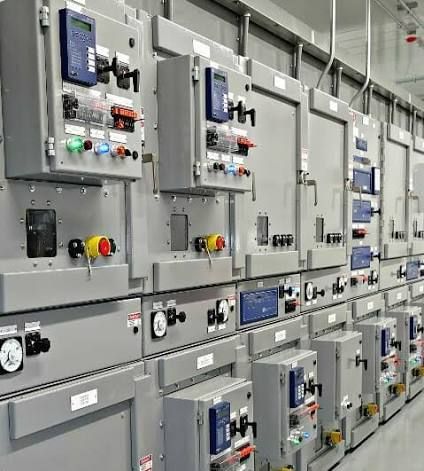
2. Switchgear
Switchgear is used to control, isolate, and protect electrical circuits.
It may include circuit breakers, isolators, protection relays, current transformers, and voltage transformers.
Switchgear is available in different configurations depending on voltage levels and application requirements.
3. Distribution Panels
Distribution panels divide incoming electrical power into multiple outgoing circuits.
They contain protective devices and switching components that supply different equipment and operational areas.
4. Busbar Systems
Busbars are conductive metal bars used to distribute electrical power within switchboards, panels, and industrial electrical installations.
They are commonly manufactured from copper or aluminum, depending on electrical requirements and design considerations.
Busbar systems provide organized power distribution and can support high-current applications.
5. Circuit Breakers
Circuit breakers protect electrical circuits by interrupting current during certain fault conditions, including overloads and short circuits.
Different types of circuit breakers are selected according to voltage ratings, current capacity, fault levels, and operating requirements.
6. Power Cables
Power cables connect transformers, switchgear, distribution panels, motors, and other electrical equipment.
Cable selection depends on current-carrying capacity, voltage rating, installation method, insulation type, environmental conditions, and applicable electrical standards.
7. Motor Control Centers
Motor control centers (MCCs) distribute power to industrial motors and provide motor starting, stopping, control, and protection functions.
They are widely used in manufacturing plants, water treatment facilities, and process industries.
8. Protective Relays
Protective relays monitor electrical conditions and detect abnormal operating situations.
They send signals to circuit breakers to isolate affected sections when specified protection conditions are met.
9. Power Monitoring Systems
Power monitoring systems measure electrical parameters such as voltage, current, frequency, power factor, and energy consumption.
These systems help businesses monitor electrical performance and identify opportunities for energy optimization.
Types of Industrial Power Distribution Systems
Industrial facilities use different distribution arrangements depending on their electrical requirements, operational priorities, and facility design.
1. Radial Power Distribution System
A radial distribution system supplies electrical power through a single main path from the source to the connected loads.
It is relatively simple to design and operate, making it suitable for smaller facilities and applications where alternative supply paths are not essential.
Key advantages:
Simple system configuration
Lower initial installation complexity
Easier protection coordination
Straightforward maintenance
2. Ring Main Distribution System
A ring main system connects distribution points through a closed-loop arrangement.
Depending on the system design and switching configuration, power may be supplied through alternative directions when one section experiences a fault or requires maintenance.
Key advantages:
Improved supply flexibility
Alternative power supply paths
Better operational continuity
Suitable for larger distribution networks
3. Network Distribution System
Network distribution systems use interconnected electrical supply paths to provide power to multiple distribution points.
They are generally used where high reliability and continuity are important.
Key advantages:
Multiple supply connections
Improved distribution flexibility
Support for critical electrical loads
Better network resilience when properly designed
4. Primary and Secondary Distribution Systems
Primary distribution generally operates at medium-voltage levels and transfers power from substations to distribution transformers or major industrial loads.
Secondary distribution operates at lower voltage levels and supplies equipment, machinery, lighting, and other facility loads.
Both stages work together to provide suitable electrical power throughout an industrial installation.
Benefits of an Efficient Industrial Power Distribution System
A well-designed electrical distribution system provides several operational and financial advantages.
1. Reliable Power Supply
Properly designed distribution infrastructure helps maintain a stable electrical supply to industrial equipment and production processes.
Appropriate protection and distribution arrangements can reduce the impact of electrical faults.
2. Improved Workplace Safety
Protective devices, proper grounding, electrical isolation, and suitable equipment enclosures help reduce electrical hazards.
A professionally designed system supports safer operation and maintenance activities.
3. Better Equipment Protection
Circuit breakers, protective relays, and monitoring devices help protect electrical equipment against abnormal operating conditions.
This can reduce the risk of equipment damage and costly repairs.
4. Improved Energy Management
Power monitoring systems provide information about electrical consumption, peak demand, and power factor.
Businesses can use this information to identify inefficiencies and improve energy management.
5. Reduced Operational Downtime
Effective protection coordination and well-planned distribution arrangements help isolate electrical faults without unnecessarily interrupting unaffected sections.
6. Easier Maintenance and Expansion
Modular distribution panels, organized cable routing, and properly documented electrical layouts make maintenance and future system expansion easier.
7. Better Load Management
Industrial power distribution systems help allocate electrical loads across circuits and distribution equipment according to their capacity and operating requirements.
Industrial Applications of Power Distribution Systems
Industrial power distribution supports operations across a wide range of industries.
Manufacturing Plants
Manufacturing facilities depend on electrical distribution systems to operate production machinery, motors, conveyors, robotic systems, and automated production lines.
Reliable power distribution helps maintain production schedules and protect sensitive equipment.
Chemical and Petrochemical Industries
Chemical processing plants use power distribution systems to supply pumps, compressors, motors, control systems, and process equipment.
Electrical installations in hazardous areas require appropriate equipment selection and compliance with applicable safety requirements.
Pharmaceutical Industry
Pharmaceutical manufacturing facilities use electrical distribution infrastructure to support production equipment, cleanroom systems, HVAC installations, packaging lines, and monitoring equipment.
Power reliability is important for maintaining controlled production environments.
Food Processing Industry
Food processing facilities depend on electrical power for refrigeration, conveyors, processing machinery, packaging equipment, and temperature control systems.
Oil and Gas Industry
Oil and gas facilities use specialized electrical distribution systems to power pumps, compressors, drilling equipment, control systems, and processing installations.
Data Centers
Data centers require highly reliable electrical distribution infrastructure to supply servers, cooling systems, network equipment, and backup power systems.
Water and Wastewater Treatment
Water treatment plants use electrical distribution systems to operate pumps, motors, filtration equipment, control panels, and treatment processes.
Factors to Consider When Designing an Industrial Power Distribution System
Designing an industrial electrical distribution system requires detailed planning and engineering evaluation.
Electrical Load Assessment
Calculate the total connected load, maximum demand, diversity, and expected future electrical requirements.
Proper load assessment helps determine suitable transformer ratings, switchgear capacity, cable sizes, and protective devices.
Voltage Requirements
Identify the voltage levels required by different machines and electrical systems.
The distribution arrangement must provide suitable voltage levels while considering voltage drop and equipment specifications.
Short-Circuit Capacity
Electrical equipment must be selected according to the prospective fault current at its installation location.
Circuit breakers and other protective equipment must have appropriate interrupting and withstand ratings.
Protection Coordination
Protective devices should be coordinated so that faults are isolated as selectively as practical.
Proper coordination can reduce unnecessary interruptions to unaffected electrical circuits.
Grounding and Earthing
An effective grounding and earthing arrangement helps control electrical fault conditions and supports safe operation.
The design must follow applicable electrical standards and local regulations.
Environmental Conditions
Consider temperature, humidity, dust, vibration, corrosive environments, and potential exposure to water or chemicals.
Suitable equipment enclosures and protection ratings should be selected for the installation environment.
Future Expansion
Industrial power distribution systems should consider future machinery additions, production expansion, and increased electrical demand.
Planning for additional capacity can reduce the need for major modifications later.
Maintenance of Industrial Power Distribution Equipment
Regular inspection and preventive maintenance help maintain electrical system reliability and reduce the likelihood of unexpected failures.
Important maintenance activities include:
Inspecting switchgear, distribution panels, and electrical enclosures.
Checking cable insulation and electrical connections.
Monitoring transformer temperature and operating conditions.
Inspecting busbars and connection points for signs of overheating.
Testing circuit breakers and protective relays according to maintenance requirements.
Checking grounding and earthing connections.
Monitoring voltage, current, and power quality.
Reviewing electrical load distribution.
Maintaining accurate electrical drawings and equipment records.
Electrical maintenance should be performed by qualified personnel using appropriate safety procedures, isolation practices, and protective equipment.
Future Trends in Industrial Power Distribution
Industrial electrical infrastructure is evolving as businesses adopt digital technologies, automation, renewable energy, and advanced energy management systems.
Smart Power Distribution
Smart distribution systems use digital meters, communication networks, and intelligent monitoring equipment to provide real-time information about electrical performance.
Digital Switchgear
Digital switchgear incorporates advanced sensors, communication capabilities, and monitoring functions to support improved equipment management and fault analysis.
Renewable Energy Integration
Industrial facilities are increasingly integrating solar power, wind energy, and other renewable sources into their electrical infrastructure.
Distribution systems must be designed to manage these sources safely and efficiently.
Energy Storage Systems
Battery energy storage can support peak demand management, backup power strategies, and renewable energy integration.
Predictive Maintenance
Advanced monitoring systems can analyze equipment operating conditions to identify potential problems before they result in major failures.
Industrial Microgrids
Microgrids combine local power generation, storage, and electrical loads within a controlled distribution network. They can improve energy management and provide additional flexibility for suitable industrial facilities.
Conclusion
Industrial power distribution is a critical part of modern electrical infrastructure. It ensures that electrical energy is delivered safely and efficiently to machinery, production lines, control systems, and other industrial equipment.
Transformers, switchgear, distribution panels, busbars, circuit breakers, cables, and protective relays work together to maintain reliable electrical operations.
Selecting the right distribution arrangement requires careful consideration of electrical loads, voltage levels, protection coordination, environmental conditions, safety requirements, and future expansion.

Related Post...
Robotic Welding Automation: Benefits, Applications, and Industrial Solutions
Updated: November 02, 2026
Read More
Microchip Manufacturing: Process, Technology, Equipment, and Applications
Updated: November 02, 2026
Read More