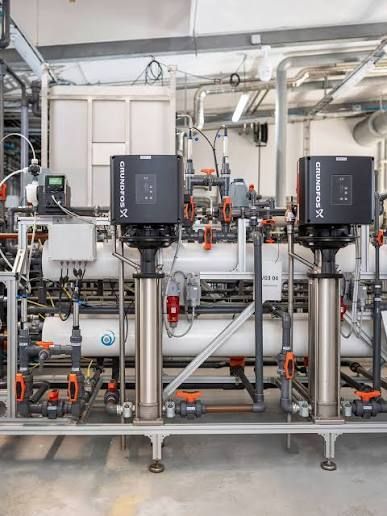
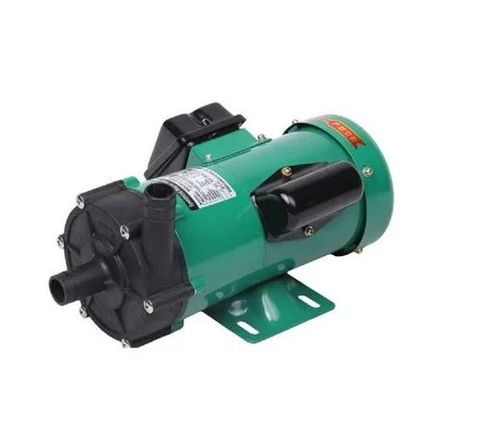
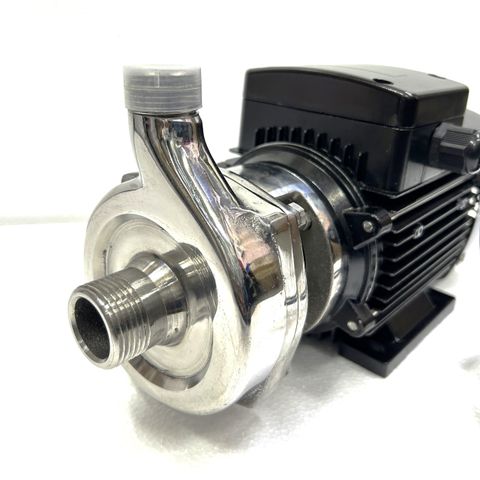
Boiler Circulation Pumps: Types, Working, Applications & Selection
Boiler circulation pumps are designed to move water or another suitable heat-transfer fluid through boiler and heating systems.
They help maintain controlled fluid circulation between the boiler, heat exchangers, distribution circuits, and associated process equipment.
Industrial boiler systems require dependable circulation to maintain heat transfer and operating conditions. Pump selection depends on factors such as flow rate, temperature, pressure, fluid properties, system configuration, and operating requirements.
What Are Boiler Circulation Pumps?
Boiler circulation pumps are mechanical devices used to circulate heated water or heat-transfer fluid through a boiler system. Depending on the system design, circulation may be driven by natural circulation or by a dedicated mechanical pump.
Forced-circulation systems use pumps to provide controlled fluid movement through the boiler circuit. These systems can be used where the required circulation cannot be achieved adequately through natural circulation alone.
A typical pump installation may include:
- Pump casing
- Impeller or pumping element
- Motor
- Shaft
- Bearings
- Mechanical seal
- Suction connection
- Discharge connection
- Temperature monitoring
- Pressure gauges
- Control equipment
Types of Boiler Circulation Pumps
Centrifugal Boiler Pumps
Centrifugal pumps use a rotating impeller to generate fluid movement. They are widely used for water circulation because of their continuous flow characteristics.
High-Temperature Circulation Pumps
High-temperature pumps are constructed for applications where the circulating fluid operates at elevated temperatures. Materials, seals, bearings, and cooling arrangements must be selected for the specific conditions.
Vertical Boiler Circulation Pumps
Vertical configurations can be used where installation space, piping arrangement, or boiler configuration requires a vertical pump orientation.
Horizontal Boiler Circulation Pumps
Horizontal pumps are commonly integrated into industrial piping systems where the pump and motor can be installed on a horizontal base arrangement.
Forced-Circulation Pumps
Forced-circulation pumps provide mechanically driven flow through the boiler circuit. They can be used in systems requiring controlled circulation rates and consistent heat transfer.
How Boiler Circulation Pumps Work
The basic operation involves continuous movement of heated fluid through the boiler circuit.
1. Fluid Entry
Water or another heat-transfer medium enters the pump through the suction connection.
2. Pumping Action
The rotating impeller or other pumping mechanism transfers mechanical energy to the fluid.
3. Pressure Increase
The pump increases the fluid pressure sufficiently to overcome system resistance and maintain the required circulation.
4. Heat Transfer
The circulating fluid passes through the boiler or heat-transfer equipment, where thermal energy is transferred to the fluid or from the fluid depending on the system configuration.
5. Return Flow
The fluid returns through the circulation loop and continues through the system.
This process repeats continuously while the circulation system operates.
Main Components
| Component | Function |
|---|---|
| Pump casing | Contains and directs the fluid |
| Impeller | Generates fluid movement |
| Motor | Provides rotational energy |
| Shaft | Transfers motor power |
| Bearings | Support rotating components |
| Mechanical seal | Limits fluid leakage |
| Suction port | Provides fluid entry |
| Discharge port | Directs fluid into the circuit |
| Coupling | Connects motor and pump |
| Control system | Regulates and monitors operation |
Component materials and configurations should match the temperature, pressure, and fluid characteristics.
Applications of Boiler Circulation Pumps
Industrial Heating Systems
Boiler circulation pumps can distribute hot water or heat-transfer fluids through industrial heating networks.
Steam and Hot Water Plants
Forced-circulation systems can support selected boiler configurations and associated heat-transfer equipment.
Chemical Processing
Chemical facilities may use heated fluid circulation for process heating, temperature control, and heat exchanger operation.
Food Processing
Boiler and hot-water circulation systems can support process heating, cleaning systems, sterilization processes, and other thermal operations.
Pharmaceutical Manufacturing
Controlled thermal circulation can be used in heating and process-support systems where temperature stability is important.
District and Building Heating
Large heating installations can use circulation pumps to distribute heated water through multiple circuits and heat exchangers.
Important Performance Parameters
Several parameters determine boiler circulation pump performance.
| Parameter | Importance |
|---|---|
| Flow rate | Determines required fluid circulation |
| Head | Indicates pressure capability against system resistance |
| Fluid temperature | Determines material and seal requirements |
| Operating pressure | Defines system pressure conditions |
| Fluid properties | Affect hydraulic and mechanical performance |
| Pump speed | Influences flow and head |
| Motor power | Determines available drive capacity |
| NPSH | Helps evaluate suction conditions |
The selected pump should operate within the manufacturer's specified limits.
Boiler Circulation Pump Selection
Choosing the correct pump requires an evaluation of the complete boiler and heating circuit.
Important factors include:
- Required flow rate
- Required pump head
- Operating temperature
- System pressure
- Fluid type
- Fluid viscosity
- Pipe dimensions
- System resistance
- Continuous or intermittent operation
- Motor requirements
- Seal configuration
- Installation arrangement
For high-temperature applications, thermal expansion, seal compatibility, bearing conditions, and cooling arrangements should receive particular attention.
Automation and Control
Modern boiler circulation systems can use automated controls to maintain appropriate flow and temperature conditions.
Control systems may monitor:
- Flow rate
- Supply temperature
- Return temperature
- Pump pressure
- Motor status
- Vibration
- System alarms
Variable-frequency drives can be incorporated into suitable systems to adjust pump speed according to changing circulation requirements.
Pump controls can also be integrated with boiler management systems to coordinate circulation with heating demand.
Maintenance Considerations
Regular maintenance helps maintain circulation performance and equipment reliability.
Typical activities include:
- Checking pump vibration
- Monitoring bearing temperature
- Inspecting seals
- Checking motor alignment
- Inspecting couplings
- Monitoring pressure and flow
- Checking valves and piping
- Inspecting electrical connections
- Reviewing unusual operating noise
For high-temperature systems, operators should also monitor signs of overheating, thermal stress, or changes in pump performance.
Boiler Circulation Pumps vs Boiler Feed Pumps
Boiler circulation pumps and boiler feed pumps perform different functions.
| Feature | Circulation Pump | Feed Pump |
|---|---|---|
| Primary function | Circulates fluid within the boiler circuit | Supplies water to the boiler |
| Main role | Supports continuous heat transfer | Maintains boiler water supply |
| Typical operation | Circulation loop | Feedwater system |
| Flow requirement | Based on circulation demand | Based on boiler feed demand |
| Pressure requirement | Based on system resistance | Often requires higher pressure |
Understanding this difference is important when designing or selecting boiler pumping equipment.
Conclusion
Boiler circulation pumps play an important role in forced-circulation boiler and industrial heating systems by maintaining controlled movement of water or heat-transfer fluids. Centrifugal, high-temperature, vertical, horizontal, and specialized forced-circulation configurations can be selected according to system requirements.
Proper selection requires evaluation of flow, head, temperature, pressure, fluid properties, system resistance, motor capacity, seals, and installation conditions. Regular inspection and appropriate control systems can help maintain reliable circulation and stable thermal performance.

Related Post...
Industrial Vacuum Pumps: Types, Working, Applications & Selection
Updated: September 19, 2026
Read More
Industrial Fire Pump Systems: Types, Components & Applications
Updated: September 19, 2026
Read More
Metering Pump Systems: Types, Working, Applications & Selection
Updated: September 19, 2026
Read More