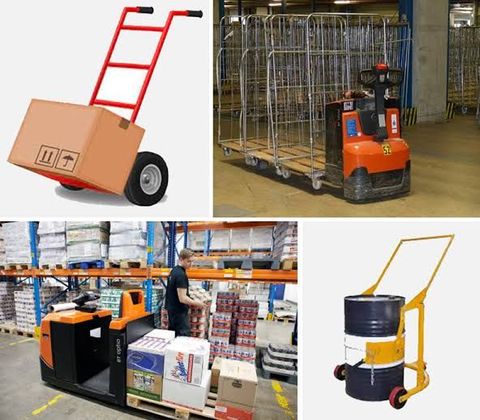
Warehouse Equipment Overview: Basics of Modern Warehouse Solutions
Warehouse equipment refers to the physical tools, systems, and technologies used to move, store, organize, and track goods within a warehouse.
Modern warehouse equipment can range from basic shelving and pallet racks to automated conveyors, warehouse robotics, inventory systems, and automated storage and retrieval systems.
The development of warehouse equipment is closely connected to the growth of manufacturing, retail distribution, e-commerce, and global supply networks. As warehouses began handling larger product volumes and wider product ranges, businesses needed organized methods for warehouse material handling, storage, picking, and movement.
Today, a warehouse equipment supplier or warehouse equipment manufacturer may work with several equipment categories. These include material handling equipment, warehouse storage equipment, industrial warehouse equipment, warehouse shelving systems, warehouse racking systems, lifting equipment, conveyors, sorting systems, and automated technologies.
Main Equipment Categories
Different warehouse activities require different types of equipment. A facility may combine manual systems with automated technologies depending on its layout, product characteristics, volume, and operational requirements.
| Equipment category | Typical purpose | Examples |
|---|---|---|
| Storage equipment | Organizing stored products | Shelving, pallet racks, bins |
| Material handling equipment | Moving goods | Pallet trucks, forklifts, conveyors |
| Lifting equipment | Raising or positioning loads | Forklifts, reach trucks, lifting platforms |
| Picking equipment | Supporting order preparation | Picking carts, scanners, automated systems |
| Automation equipment | Reducing repetitive movement | AMRs, AGVs, ASRS |
| Control systems | Coordinating warehouse activities | WMS, WCS, inventory systems |
Warehouse storage systems are often designed around product dimensions, load characteristics, available floor space, and movement frequency. Warehouse shelving systems can support smaller products, while pallet racking systems are commonly used for palletized inventory.
Importance
Warehouse equipment matters because the movement and storage of products directly affect how a facility operates. Poorly arranged equipment can create unnecessary travel, difficult picking routes, limited storage visibility, and additional handling requirements.
Modern material handling equipment helps organize movement between receiving areas, storage locations, picking zones, packing areas, and shipping areas. Warehouse handling systems can therefore involve several connected equipment types rather than a single machine.
Supporting Warehouse Operations
Warehouse forklifts, electric forklifts, and warehouse reach trucks are commonly associated with pallet movement and vertical storage. Their application depends on factors such as aisle width, load characteristics, lifting height, floor conditions, and operating environment.
Warehouse pallet racks and industrial shelving systems also influence how much usable storage space is available. Different rack configurations can support different pallet dimensions, access patterns, and inventory arrangements.
Order preparation is another important area. Warehouse order picking equipment can include carts, mobile computers, scanners, conveyors, picking stations, and automated systems. Order picking systems are increasingly connected with inventory and warehouse management platforms.
Improving Visibility and Coordination
Warehouse inventory equipment and warehouse inventory systems help organizations track product locations and quantities. A warehouse management system can coordinate receiving, put-away, storage, picking, replenishment, and shipping activities.
Warehouse management software can also exchange information with warehouse control systems and other business platforms. This creates a more connected operating environment in which equipment activity and inventory information can be coordinated.
The need for better coordination becomes more significant as warehouses handle larger product ranges, shorter processing windows, and more complex order patterns. Automation can address some repetitive activities, although automated systems still require suitable layouts, maintenance, supervision, and data management.
Recent Updates
Warehouse technology has continued moving toward greater automation, software integration, and data-driven control during the 2024–2026 period. The trend is not limited to large automated facilities; modular technologies are also being considered for warehouses with changing operational requirements.
Growth of Warehouse Automation
Automated warehouse equipment increasingly includes robotic systems, conveyor networks, automated sorting, and automated storage technologies. Warehouse automation equipment can be connected to warehouse management software and warehouse control systems to coordinate movement.
Automated conveyor systems are being combined with sensors, scanners, and control software to direct products between different work areas. Warehouse sorting systems can use identification information to route items according to destination, order, or processing stage.
Mobile Robotics
Warehouse robotics has expanded through technologies such as autonomous mobile robots and automated guided vehicles. AMR warehouse systems generally use onboard sensors and software to navigate changing warehouse environments, while AGV warehouse systems commonly follow defined routes or navigation structures.
Autonomous warehouse robots can support activities such as transporting containers, moving picked items, replenishing work areas, or transferring materials between operational zones. Their usefulness depends on facility design, traffic patterns, payload requirements, and software integration.
Automated Storage and Retrieval
Automated storage systems are another important development. ASRS warehouse systems use automated mechanisms to place and retrieve stored items from designated locations.
Automated storage and retrieval systems can be configured for different product sizes and storage arrangements. They may use cranes, shuttles, lifts, robotic mechanisms, or other automated movement technologies.
The current direction is toward connecting ASRS, conveyors, robots, scanners, and software into coordinated warehouse ecosystems rather than treating each machine as an isolated system.
Energy and Data Considerations
Electric forklifts and other electrically powered equipment continue to receive attention as warehouses consider energy use, charging infrastructure, indoor air conditions, and equipment utilization. At the same time, sensors and software are increasingly used to collect information about equipment activity and warehouse processes.
Data integration is also becoming more important. Warehouse management systems, warehouse control systems, inventory platforms, robotics software, and enterprise systems may need to exchange information to maintain consistent operational data.
Laws or Policies
Warehouse equipment is affected by workplace safety regulations, equipment standards, building requirements, and environmental rules. Requirements differ by country and by the type of warehouse activity being performed.
United States Workplace Safety
In the United States, the Occupational Safety and Health Administration establishes workplace safety requirements that can apply to warehouse operations. Rules covering material storage, walking-working areas, machine safety, and powered industrial trucks are particularly relevant to warehouse equipment.
Powered industrial trucks, including many types of forklifts, are subject to requirements concerning operator training, equipment inspection, safe operation, and workplace conditions. Warehouses must also consider appropriate procedures for pedestrian movement and equipment traffic.
Storage systems such as pallet racks may also be influenced by building codes, structural requirements, workplace safety practices, and local regulations. The exact requirements can vary according to the facility and jurisdiction.
Other Regulatory Considerations
Warehouse operators may also need to consider fire protection requirements, electrical safety, emergency access, battery charging areas, loading docks, and equipment maintenance procedures.
For automated systems, additional considerations can include machine guarding, emergency stops, restricted access areas, electrical systems, and safe interaction between people and robotic equipment.
Because regulations can change and local requirements vary, organizations should verify applicable rules with the relevant government authority, qualified safety personnel, or regulatory professional before implementing or modifying warehouse equipment.
Tools and Resources
Several digital and planning tools can help people understand warehouse layouts and equipment requirements. Warehouse layout software can be used to visualize storage locations, travel paths, equipment zones, and work areas.
Warehouse management software is used to coordinate inventory and warehouse activities. Depending on the system, it may include receiving, put-away, picking, replenishment, inventory tracking, reporting, and integration features.
Planning Resources
Useful resources can include:
- Warehouse layout templates for planning storage and movement areas
- Rack load documentation for evaluating storage configurations
- Forklift capacity information for understanding lifting limitations
- Inventory classification worksheets for organizing product groups
- Warehouse space calculators for estimating storage requirements
- Equipment inspection checklists for routine operational reviews
- Workflow diagrams for mapping receiving, storage, picking, and shipping
- Warehouse management system documentation for understanding software functions
Digital warehouse simulation tools can also help evaluate possible layouts before physical changes are made. These tools may model travel paths, storage density, equipment movement, and workflow interactions.
For automated facilities, system documentation is particularly important because conveyors, robots, scanners, warehouse control systems, and warehouse management systems may depend on coordinated data exchanges.
FAQs
What is warehouse equipment?
Warehouse equipment includes tools and systems used for storing, moving, lifting, picking, sorting, and tracking goods. Examples include shelving, pallet racks, forklifts, conveyors, scanners, robots, and automated storage systems.
What is warehouse material handling?
Warehouse material handling refers to the movement, storage, protection, and control of materials within a warehouse. It can involve manual equipment, forklifts, conveyors, pallet handling equipment, and automated material handling systems.
What are warehouse racking systems?
Warehouse racking systems are structural storage arrangements designed to hold palletized or other stored goods. Pallet racking systems can be configured in different layouts according to load dimensions, available space, access requirements, and warehouse operations.
How does warehouse automation equipment work?
Warehouse automation equipment combines mechanical equipment, sensors, software, and control systems to perform or coordinate repetitive warehouse activities. Examples include automated conveyor systems, sorting systems, ASRS warehouse systems, AMRs, and AGVs.
What is the role of warehouse management software?
Warehouse management software helps organize inventory and warehouse activities. Depending on its configuration, it can coordinate receiving, storage, picking, replenishment, inventory records, and shipping while exchanging information with other warehouse systems.
Conclusion
Warehouse equipment includes a broad range of storage, handling, lifting, picking, transportation, and automation technologies. Modern facilities increasingly connect physical equipment with warehouse management systems, warehouse control systems, robotics, and inventory platforms. Developments in automated conveyors, AMRs, AGVs, and ASRS are changing how warehouses organize repetitive material movement and storage. Safety regulations, facility design, equipment capabilities, and software integration remain important factors in understanding modern warehouse operations.

Related Post...

Commercial Lighting Overview: Types, Applications, and Design Considerations
Updated: August 19, 2026
Read More
Video Advertising Platforms Guide for Marketers to Drive Best ROI
Updated: September 02, 2026
Read More