Chemical Transfer Pumps: Types, Working, Applications & Selection
Chemical transfer pumps are designed to move chemicals and process fluids safely and consistently between tanks, pipelines, processing equipment, and storage systems.
They are used in chemical manufacturing, water treatment, pharmaceuticals, agriculture, food processing, and various industrial operations.
Chemical fluids can vary significantly in corrosiveness, viscosity, temperature, concentration, and chemical composition. Pump selection therefore requires careful consideration of the fluid properties and operating conditions.
What Are Chemical Transfer Pumps?
Chemical transfer pumps are fluid-handling devices designed to transport chemical liquids from one location to another. Depending on the application, they can be configured for acids, alkalis, solvents, reagents, corrosive liquids, and other process fluids.
A chemical transfer system may include:
- Pump
- Motor or drive
- Suction piping
- Discharge piping
- Valves
- Filters or strainers
- Pressure gauges
- Flow monitoring
- Chemical-resistant seals
- Control equipment
The pump construction should be compatible with the chemical being handled.
Types of Chemical Transfer Pumps
Centrifugal Chemical Pumps
Centrifugal pumps use an impeller to generate continuous fluid flow. They are commonly used for relatively low-viscosity chemical liquids where the required flow and pressure fall within the pump's operating range.
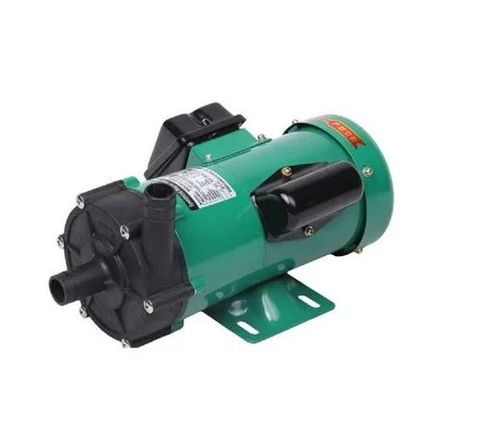
Magnetic Drive Chemical Pumps
Magnetic drive pumps transfer rotational power through magnetic coupling and can use a sealless containment arrangement. They are often considered for applications where minimizing process-fluid leakage is important.
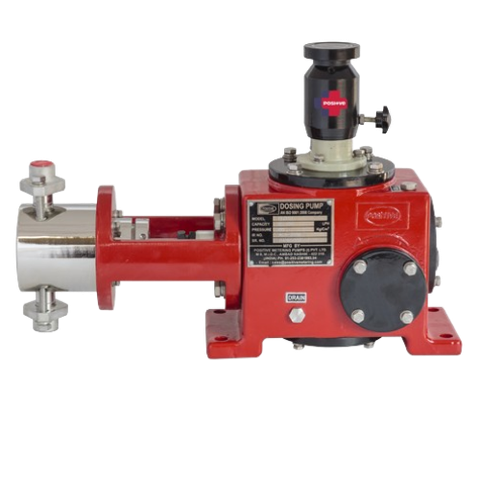
Diaphragm Chemical Pumps
Diaphragm pumps use a flexible diaphragm to move fluid. They can be suitable for certain corrosive chemicals, slurries, and fluids requiring isolated pumping chambers.
Peristaltic Chemical Pumps
Peristaltic pumps move fluid through flexible tubing or hose using a rotating compression mechanism. The fluid remains inside the tubing, which can be useful for certain chemically aggressive or contamination-sensitive applications.
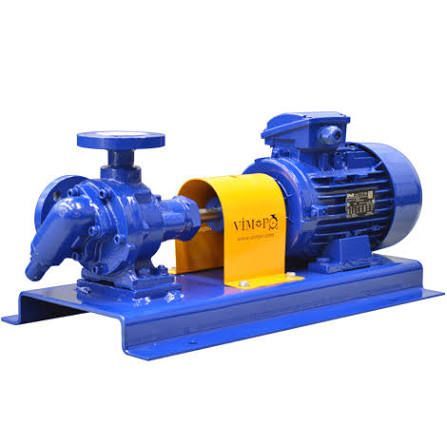
Gear Chemical Pumps
Gear pumps use rotating gears to transport fluid through the pump casing. They can be suitable for compatible chemicals with higher viscosity and controlled flow requirements.
How Chemical Transfer Pumps Work
The operating principle depends on the pump technology, but a typical transfer cycle involves several stages.
1. Fluid Entry
Chemical liquid enters the pump through the suction connection from a storage tank, vessel, or process line.
2. Pumping Action
The selected pumping mechanism transfers mechanical energy to the fluid.
3. Pressure Generation
The pump develops sufficient pressure to overcome piping resistance, elevation changes, valves, filters, and other system components.
4. Fluid Transfer
The chemical moves through the discharge piping toward the destination tank or process equipment.
5. Flow Control
Valves, control systems, variable-speed drives, or other devices can regulate the required flow according to the process.
Main Components
| Component | Function |
|---|---|
| Pump casing | Contains and directs the chemical |
| Impeller or pumping element | Generates fluid movement |
| Motor | Provides mechanical power |
| Shaft | Transfers rotational energy |
| Seals | Limit chemical leakage |
| Suction port | Allows chemical entry |
| Discharge port | Directs chemical into the process |
| Valves | Control and isolate flow |
| Strainer | Helps protect the pump from particles |
| Control system | Monitors and regulates operation |
Materials vary according to the chemical, temperature, pressure, and concentration.
Applications of Chemical Transfer Pumps
Chemical Manufacturing
Chemical plants use transfer pumps to move raw materials, intermediates, solvents, acids, alkalis, and finished process liquids between different production stages.
Water and Wastewater Treatment
Chemical pumps can transfer treatment chemicals such as coagulants, disinfectants, pH-control chemicals, and other process fluids.
Pharmaceutical Manufacturing
Specialized pumps can be used for transferring process chemicals, solvents, cleaning fluids, and other compatible liquids.
Agriculture and Fertilizer Processing
Chemical transfer systems can handle selected liquid fertilizers, agricultural formulations, and treatment chemicals.
Petrochemical Processing
Pump systems can transfer compatible fuels, solvents, additives, and other process liquids within petrochemical facilities.
Industrial Cleaning
Chemical-resistant pumps can circulate or transfer cleaning formulations used in industrial processing and equipment-cleaning systems.
Chemical Compatibility and Pump Materials
Material compatibility is one of the most important considerations in chemical pump selection.
Common construction materials may include:
- Stainless steel
- Hastelloy and other specialty alloys
- Polypropylene
- PVDF
- PTFE-based components
- Reinforced plastics
- Specialized elastomers
The correct material depends on chemical concentration, temperature, exposure time, pressure, and other process conditions. Compatibility data should be verified for the specific chemical and operating environment.
Important Performance Parameters
| Parameter | Importance |
|---|---|
| Flow rate | Determines transfer capacity |
| Head or pressure | Defines the required discharge capability |
| Chemical concentration | Influences material compatibility |
| Temperature | Affects fluid and component behavior |
| Viscosity | Influences pumping performance |
| Specific gravity | Affects hydraulic and motor requirements |
| Vapor pressure | Important for suction conditions |
| Solids content | Influences pump configuration |
| Seal type | Helps control leakage |
These parameters should be evaluated together rather than independently.
How to Select Chemical Transfer Pumps
Pump selection should begin with a detailed description of the chemical and the process.
Important factors include:
- Chemical composition
- Concentration
- Required flow rate
- Discharge pressure
- Fluid temperature
- Viscosity
- Specific gravity
- Vapor pressure
- Solids content
- Pump materials
- Seal arrangement
- Continuous or intermittent operation
- Motor requirements
- Installation configuration
For hazardous or highly corrosive chemicals, containment, ventilation, leak detection, and appropriate safety systems should also be considered.
Safety Considerations
Chemical transfer systems require appropriate engineering and operating procedures. A pump that is hydraulically suitable may still be inappropriate if its wetted materials or seals are incompatible with the chemical.
Important considerations include:
- Chemical-resistant materials
- Appropriate containment
- Leak detection
- Correct valve configuration
- Proper ventilation where required
- Pressure protection
- Emergency isolation
- Operator training
- Appropriate personal protective equipment
Applicable chemical-handling regulations and facility procedures should be followed.
Maintenance Considerations
Regular maintenance can help maintain pump performance and reduce unexpected failures.
Typical activities include:
- Inspecting seals and gaskets
- Checking pump casing
- Monitoring vibration
- Checking bearings
- Inspecting hoses and piping
- Monitoring pressure and flow
- Checking valves
- Inspecting electrical connections
- Looking for signs of corrosion
- Reviewing abnormal noise or temperature
Maintenance procedures should account for the chemical being handled and the manufacturer's technical requirements.
Conclusion
Chemical transfer pumps are important components of industrial fluid-handling systems where chemicals must be moved between storage, processing, and treatment stages. Centrifugal, magnetic drive, diaphragm, peristaltic, and gear pump technologies provide different characteristics for different chemical applications.
Proper selection requires evaluation of chemical compatibility, concentration, temperature, viscosity, flow, pressure, vapor pressure, solids content, materials, seals, and safety requirements. A complete system assessment helps ensure that the pump is appropriate for its intended operating environment.

Related Post...
Industrial Vacuum Pumps: Types, Working, Applications & Selection
Updated: September 19, 2026
Read More
Chemical Transfer Pumps: Types, Working, Applications & Selection
Updated: September 19, 2026
Read More
Industrial Screw Pumps: Types, Working, Applications & Selection
Updated: September 19, 2026
Read More